|
Information CANADIAN CARPET INSTITUTE CARPET 101
WHY CARPET?
CARPET MYTHS CARPET 101 What is Carpet? Carpet is a textile soft floor covering that is produced by the permanent orientation of fibres, synthetic or natural, into a substrate. The surface of the carpet is referred to as the pile and may be cut or loop or a mixture of both in nature. Numerous methods of manufacture exist to achieve this end. Various backing systems are available to stabilize the product and may be specific to the carpet's end use. Generally, carpet refers to broadloom goods, available in various manufactured widths, where installation is permanet, yet - ultimately - removable. Rugs refer to loose laid carpet, traditionally smaller than room dimensions in size. Capet offers great value along with the general benefits of security, esthetic beauty, comfort under foot and insulation factors, sound absorption and even some repiratory health advantages. - Fibres - Texture - Construction - Characteristics Carpet Shading / Pile Reversal Carpet shading is a characteristic of all types of cut pile Saxony and plush carpets, and may occur in loop pile carpets. Whether it be the highest priced hand-made Oriental rug or the least expensive tract home installation, this phenomenon may occur. There are, however, various types of shading. These various types of shading are defined in the International Organization for Standardization publication "Textile Floor Coverings - Vocabulary" (ISO Standard 2424) as follows: SHADING is a change in the appearance of a textile floor covering during normal use due to localised alterations in the orientation of the fibres, tufts or loops. This is not a real change in hue, but a difference in light reflection, which can occur as temporary shading or tracking, which are defined as follows: Temporary shading is a reversible localised change in the orientation of the pile of a textile floor covering during normal use (sometimes described as a normal characteristic of certain cut pile textile floor coverings, ie: footprints, vacuum marks, etc.). Tracking is a gradual change in the appearance of a textile floor covering from the edge to the middle of a narrow band caused by repeated walking over the same area which may result in a localised change in pile orientation and may be irreversible. PILE REVERSAL is an irreversible localised change in the orientation of the pile of a textile floor covering. This phenomenon has different names in different countries. In North America, pile reversal is often referred to as "watermarking" or "pooling" since the areas in which the phenomenon occurs often look as if they are wet. Although much research has gone into finding the cause of this occurrence, no one to date has found the cause or cure. It is not limited to carpets produced by any particular manufacturing method and can occur in carpets made from all pile fibres. It only happens on a few installations of the same carpet style. Furthermore, if several carpets are laid side by side in an area prone to "watermarking", the pile reversal pattern has been shown in some instances to run from carpet to carpet. Since there is no known cause for this to happen, and since it happens only infrequently on installations of the same style of carpet, it is clearly not a manufacturing defect. Therefore, as distressing as this change of appearance may be to certain purchasers, this shading may occur on a small percentage of Saxony or plush carpet installations and is an occasional characteristic of these luxurious products. If these effects are not desired, it is suggested that another texture of carpet be selected. September 2002A SHORT HISTORY OF CARPET Carpets have been produced and used as home furnishings for thousands of years. They evolved from simple floor and entrance coverings that protected nomadic people from the cold to valuable possessions of kings and noblemen who looked upon them as signs of wealth, prestige and distinction. In the beginning, the manufacturing processes were extremely costly in terms of the human efforts expended in harvesting fibres, spinning yarns by hand, dyeing the yarns and knotting short lengths by hand into arrays of backing yarns arranged on frames. Woven carpets emerged early in human history also. By their nature, woven carpets are less expensive than knotted carpets. Their production called for the same fibre and yarn production effort required for knotted carpets. However, as plain weaving avoided the immensely laborious process of knotting, carpet weavers made good products at a substantially lower cost to serve a broader segment of the population. Mechanization of spinning and weaving in Europe in the 18th century reduced the cost of woven carpets, paving the way to increased carpet consumption in Europe and North America. Hand knotted carpets and rugs continued to be produced on a limited scale to serve the luxury market. The lowest-cost product in the spectrum of soft floor coverings was the hand-hooked rug. Hooked rugs, the ancestor of machine-tufted carpeting, could be made by consumers for their own use in spare hours from used materials without any outlay of cash The floor covering market in North America, from the mid-18th century to the mid-20th century, was served by three classes of soft floor covering: hand-knotted luxury products; carpets woven on power looms; and hand-hooked rugs. The traditional market persisted until fifty years ago, when it was transformed dramatically by the introduction of machine tufted carpeting. Tufted carpeting, like the hand-hooked rugs before it, requires only a simple woven backing (originally of jute) and a supply of the 'face' yarns which form the pile. The carpet tufting machine, unfettered by the width and speed limitations of weaving looms, had greater potential in terms of productivity and value to consumers than any carpet manufacturing system used before 1950. The new industry, supported by rapidly advancing technology, set out to produce excellent tufted carpets while simultaneously reducing their cost. Man-made fibres, of several types developed since World War II, brought cleanliness and productivity to the carpet manufacturing plants of the new industry In a rapidly expanding market, the spun yarns traditionally used in carpets lost ground as technology provided new advantages in the form of bulked continuous filament (BCF) yarns. Carpet manufacturing began to integrate upstream in a trend born in Canada and Belgium around 1970. Several firms in the industry in Canada now manufacture a substantial proportion of the BCF products they use to produce the pile of tufted carpeting. While these advances were being made in materials, tufting machines were increasing from speeds in the order of 200 cycles per minute in the 1950s to 2000 cycles per minute today. Consequently, the industry has been able to achieve outstanding improvements in production economics and product performance. The results have been remarkable in the appearance, functionality and cost-effectiveness of carpet products for use in commercial and institutional buildings as well as those designed for use in our homes. WHY CARPET? Because carpet adds colour, warmth, comfort, beauty and a health factor to your home. Because carpets are practical. Because carpets are the decorating element that will provide the most enjoyment. And because carpets can even be good for you! Carpets are practical because they're easier on the feet, they prevent slips and cushion falls, they reduce the noise level and, because of their natural insulating properties, can help reduce the cost of heating / air conditioning. As a decorating element, carpets - because of their many styles, textures and colours - help consumers create the atmosphere they want for their home, from the most subdued to the most dazzling. By trapping and thereby keeping dust, pollen and other particulates that could exacerbate allergies or an asthmatic condition out of the breathing zone, carpets can actually be good for your health! NOTHING BEATS THE WARM, FUZZY FEELING OF CARPET UNDERFOOT FIRST THING IN MORNING There is nothing in the world that can beat the warm, fuzzy feeling of a carpet underfoot when you first get up in the morning and start walking about. Or laying on a carpet reading a book. "We don't live in California," says Jim Larson of McMahon Canada, a distributor of flooring, “if you live in southern California, you can put ceramic tile throughout your place. It feels cool underfoot... but on the West Coast of British Columbia, where I live, people don't want a cool flooring underfoot and they unfortunately find that out after they put it in." "There is no doubt when you're walking around barefoot it is nice having a carpet underfoot," says Alexandre Lacroix of manufacturer Groupe St. Georges/Venture. "Hard surfaces can't match carpeting for that level of comfort." Architect and interior designer Ed Calnitsky describes the comfort factor as one of the most appealing aspects of carpeting. "Carpets are soft to walk on, look great and have a calming effect on a space," he observes. Don Hedges, for example, a sergeant in the Canadian army who lives just outside Halifax, Nova Scotia, recently installed carpet. Last fall, a sewer backup ruined his basement. With the blessing of his insurance company, Hedges had new carpeting installed in the rebuilt area because, he says, “carpeting looks warm and is comfortable under foot”. Interior designer Barbara Kaplan's favourite type of carpeting are berbers. “They are warm on the feet, bounce back quickly and stand up for years”, she points out. In a basement or rec-room, a hardy berber can add warmth to the room and make the atmosphere enjoyable as compared to harder surfaces that make the area seem uncomfortable. Crossley Carpets” Margaret Savard adds that in institutions where residents stay for many years, carpeting in their rooms recaptures the warmth and comfort of home. Larson says a growing number of people are using area carpets to soften the look of hard flooring. Leslie Beaumont, of carpet manufacturer Beaulieu Canada, agrees, saying, "Anyone who puts in a wood floor, probably the next purchase they make is an area rug.” She says some people are just buying large pieces of a wall to wall patterned carpet and having it bound to use as an area rug. Toronto residential interior designer Linda Borman says, "Homes that combine hard and soft flooring end up being more interesting. She says that she has seen a tremendous growth in the use and variety of area rugs, "from contemporary designs [to] more traditional. Everything from muted colours that are so much in vogue, to the creams and khakis right through to very vibrant wonderful florals that are almost tropical." Although hard surfaces such as wood, laminate and ceramic are very popular, nothing beats the warm, fuzzy feeling of carpet underfoot first thing in the morning! 'SOFT' CARPETS PROTECT AGAINST 'HARD' FALLS One of the key drawbacks to hard surface floor coverings is found in the word "hard". If you should fall, you would no doubt rather be hitting your head on a carpet than on a hardwood floor or on ceramic tile. It is one of the reasons that many families with young children are choosing to put carpet in their homes. Furthermore, as interior designer Barbara Kaplan notes, one is more likely to slip on tile or on a wood floor than on a plush carpet. Leslie Beaumont, Director of Marketing for Beaulieu Canada, notes that carpeting prevents slips and cushions falls and that glass objects don't shatter when they fall. Thus, when considering what kind of floor covering to buy for institutions such as schools, hospital or nursing homes, or even in private homes with young children or seniors, safety would dictate that carpeting be given serious consideration. When kids are running around and falling or an older person loses his or her balance and falls, carpeting will absorb the shock as compared to hard flooring and reduce the likelihood of injury. "We have had a lot of discussion lately about the safety advantages of carpeting, especially in institutional applications," says Margaret Savard, Marketing Coordinator for manufacturer Crossley Carpets. "While hard surfaces have been popular for a long time, it is very important to take into consideration who is going to be walking on the floor and what shape the walker and the floor are in. You might also want to take into account weather conditions and objects that may be left laying around on the floor. In many cases, carpet is the safest alternative." CARPETED ROOMS DAMPEN DOWN NOISES FROM WITHIN AND WITHOUT Anyone who has ever lived in an apartment knows what it's like to have noisy neighbours. You have the thump, thump, thump of footsteps overhead and the revelry or arguments in the next apartment reaching your ears through paper-thin walls. Didn't you wish the people upstairs would be considerate enough to at least put carpeting on their floors to lessen the noise? Or perhaps you have active young children upstairs. Carpeted bedrooms make them seem much quieter. Linda Borman, a Toronto residential interior designer, says her younger clients, especially those with children, are choosing carpeting because of it's ability to absorb noise. Jean Claude Carisse, Executive Director of the Canadian Carpet Institute, notes that for institutions such as schools and hospitals, carpeting's sound deadening capacity is particularly advantageous. "Experiments show that not only is carpeting safer but also better for sound deadening," Carisse says. "I heard this at a pollution seminar I attended in Halifax.” He relates a story about a complaint he heard from a school. At first, he thought they were going to complain about a particular carpet. However, the complainants were upset that there was no carpeting in the school. They missed its sound-deadening qualities! Acoustics was the reason Colin and Margaret Yakashiro chose carpeting in two of the rooms in their new home in Abbotsford, B.C. They didn't want the noises of the home interfering with Colin's work - he works out of his home and has clients worldwide, and Margaret didn't want to feel as though she had to keep everything quiet, especially with three children and a dog, every time Colin was on the phone. Incidentally, architect and interior designer Ed Calnitsky notes that for those readers with noisy neighbours, you might consider putting carpets on your walls. They will look good and help sound proof the walls! WARMTH OF CARPETING MORE THAN JUST APPEARANCE In the olden days, before this modem age of insulation and central heating, inhabitants of draughty European castles often put tapestries on their walls. Certainly the tapestries and area rugs were esthetically pleasing, but they also acted as insulation. Although the consumer is not usually considering R-Value when selecting a floor covering, its insulating properties are one of the factors that gives carpeting a commanding edge over the alternatives in such key areas as the bedroom and rec-room. Although it is not usually an issue, agrees architect and interior designer Ed Calnitsky, carpeting's R-value is higher than most other types of floor covering. Leslie Beaumont of Beaulieu Canada points out that the physical properties of carpet make it an effective insulator against cold, which can reduce the cost of home heating and air conditioning by increasing the R-value of the carpeted area. Warmth and comfort are also the reasons Steve and Becky Strome give for installing carpeting in the bedrooms and rec-room of their new house on Big Island, south of Picton, Ontario. "We were just more comfortable with carpeting in those rooms," he says. Steve also notes that carpet is more affordable than hardwood floors. Jean Claude Carisse, Executive Director of the Canadian Carpet Institute, notes that carpeting, especially glued down in basement areas, creates a warmer environment. CARPET OFFERS THE WIDEST CHOICE IN FASHION TRENDS There is a much greater choice with carpets than with any other floor covering when it comes to making a fashion choice for your home decor. Jean-Claude Carisse, Executive Director of the Canadian Carpet Institute, received a first hand view of that range of selections last year while building a new family home. “I was amazed at the number of samples in the retail stores and how much more variety there was in carpeting than in other floor covering,” he says. Interior designer Barbara Kaplan adds that the number of design ideas you can incorporate in a carpet is phenomenal. “We do a lot of designs using area rugs,” she says, “but we can also work with wall-to-wall carpeting using different designs and borders.” She notes that in carpeting, there is a fabulous array of colours and styles. “You can do something contemporary with your carpets and have a traditional carpet covering the floor,” she says. “A carpet can be just a good old carpet or a piece of art.” Leslie Beaumont, Director of Marketing for Beaulieu Canada, observes that carpet is still the first of Canadians for home decor because it is affordable, naturally practical and is an infinitely pliant design tool. "Today's carpet, more than ever, is a wonderful design medium, providing unlimited decorating options to explore," says Beaumont. "Innovations in yarn and manufacturing technology offer the very latest in contemporary carpet pattern, texture and colour. Carpet offers everything from rich, multi-level textures and floral old world European designs, to rustic sisal-look ribs, friezes, to soft looped geometrix. When incorporated into a room decor, a contemporary textured carpet increases the perception of quality and value and offers a delightful contrast to smooth surface areas such as walls and furniture. Picking up the thread, Crossley Carpets’ Margaret Savard says that carpets present so many different options. “The possibilities with carpets are limitless,” she says. “The wide range of colours can add numerous dimensions to the surroundings.” Alexandre Lacroix of manufacturer Groupe St-Georges/Venture notes that there are dozens and dozens of different colour ranges in carpet with many, many patterns in each range. In hardwood and other floor coverings, the colour choices are considerably more limited. In terms of colour trends, Beaulieu’s research shows that tinted neutrals will be popular this year. “A lot of our new loops have been launched in colours that are neutral but still add a tone to the environment and bring things together,” says Beaumont. Jean-Claude Carisse would urge consumers to visit carpet retailers as he did, compare carpets to other forms of floor surfaces, and see for themselves how carpet can accentuate whatever features in your room you want to highlight. CARPET CAN BE GOOD FOR YOUR RESPIRATORY HEALTH IAQ and Carpet For a number of years now, some designers and specifiers have been hesitant to recommend carpet as a design tool and to specify its use in new buildings and homes because of unfounded concerns regarding poor indoor air quality (IAQ) resulting from the installation of carpet. Canadian carpet manufacturers have since 1993 been complying voluntarily with a rigorous industry standard that sets limits on the levels of volatile organic chemicals (VOC) emissions. The program monitors VOC levels, collects scientific data, screens out objectionable products and provides a strong basis for consumer confidence. Carpet specimens are taken directly from the manufacturing line in air-tight packaging to an independent laboratory where they pass or fail. Carpets that have passed this testing program are identified with the Green Label affixed to the back of the carpet. Recent research conducted by Host/Racine (a US manufacturer and supplier of carpet cleaning equipment and materials) shows that “carpet is an asset to the health of indoor environments”. After collecting data from schools and private homes, the firm determined that dust, pet hair, pollen and mold spore allergens either fall onto carpet from indoor air or are deposited by walkers. Part of their study, conducted between 1995 and 1997 in 17 carpeted classrooms located in Nebraska, Wisconsin, Florida and North Carolina, analysed mold spore levels and found that the air held far fewer spores than the carpet, less than 1% of the carpet levels in some cases. Carpet plays the role of a filter and a trap that holds biologicals out of the breathing zone until they are removed easily by vacuuming. Further evidence that carpet does not contribute to poor IAQ has come from the results of a number of projects conducted in Norway and Sweden. Leading Norwegian indoor environmental consultant Gaute Flatheim concludes that “soft floorings have unfairly received bad press for contributing to poor indoor (air) quality without any real evidence to support this”. A Norwegian test institute, Rogaland Research, carried out a comparative test between soft and hard flooring in four classrooms in Lilliehammer, to discover which type of flooring would provide better IAQ. Two of the classrooms were carpeted, and two were fitted with hard flooring. IAQ measurements were taken before, during and after school hours. Says scientist Ernst Olsen: “It looks as if the carpeted rooms are slightly better compared to the hard floors. The fine dust seems to be bound into the carpets.” These results, added to the other benefits of carpet (noise reduction and a perceived improvement in the standard of the rooms, to name but two), show that carpet can be beneficial in improving the surroundings of both work and school buildings. Although there is a perception that carpet in a health care facility is not as sanitary as a hard surface, a recent study by the US Center for Disease Control found no increase in bacterial or fungal (grouped as microbial) growth in carpet in a hospital as compared with a hard surface, when the carpet is properly maintained. If carpet does not contribute to problems of IAQ when it is properly installed and maintained, why not recommend or specify its use in your proje cts? September 2000
VOCs, CARPET AND INDOOR AIR QUALITY All living matter, as well as many of the materials used to make household products and building materials, is made of organic chemicals. Volatile organic chemicals (VOCs) are those which are light enough to evaporate at room temperature and so escape into the air. Most VOCs are harmless in the concentrations encountered in normal life. For example, methane is emitted from animals but it is not considered hazardous in the concentrations found in dairy barns. Ethyl alcohol is emitted from cocktails but it is not hazardous in the concentrations found in bars. In new homes and offices, there is a “new house” scent caused by VOCs emitted by items such as paint, particle board, furniture and carpet. “New house” scent diminishes rapidly, usually lasting only a few weeks because of ventilation and declining emissions. As new house occupants begin to use household products (e.g. furniture polish, hair spray) which emit VOCs, the VOCs in the indoor air increase to a level which is then maintained more or less constantly. Meanwhile, the VOC content of the building materials and furnishings continues to decline until there is essentially nothing left. A crossover occurs within the first few months of occupancy, when emissions from consumer products increasingly outweigh any residual emissions from building materials and home furnishings. Most people enjoy the smell of a new house. In our experience at the Canadian Carpet Institute, consumers rarely complain about it. There are, however, people who have anxieties about the composition of indoor air, and researchers are searching for any relationship which might possibly exist between the VOCs in indoor air and the concerns of individuals who may be hypersensitive to certain VOCs. Since 1993, carpet manufacturers in Canada have been complying voluntarily with a rigorous industry standard which sets limits on the levels of VOC emissions. The program monitors VOC levels, collects scientific data, screens out objectionable products, and provides a strong basis for consumer confidence. Carpet specimens are taken directly from the manufacturing line in air-tight packaging to an independent laboratory where they pass or fail. Consumers can identify carpets which have passed this testing program by the Green Label affixed to the back of the product. The Green Label indicates that the carpet meets the standards of the Indoor Air Quality Program of the Canadian Carpet Institute. A new carpet, fresh from the carpet mill where it was produced, rolled up and packaged, will have a “new carpet” smell. This is most noticeable when the roll is opened and it may continue to be noticeable for a few days afterward. Consumers or building managers aiming to minimize the VOC content of indoor air should pay particular attention to the ventilation of newly-carpeted spaces in that first week. In rare instances where an individual’s hypersensitivity is an issue, arrangements may be made for rolls to be opened and laid flat off-site for a number of days before delivery and installation. The majority of VOCs in a roll of new carpet is gone within one week. At that point, the consumer has a floor covering essentially free of VOCs and which can be expected to provide colour, comfort, noise suppression and cost-effective service for many years. May 1999
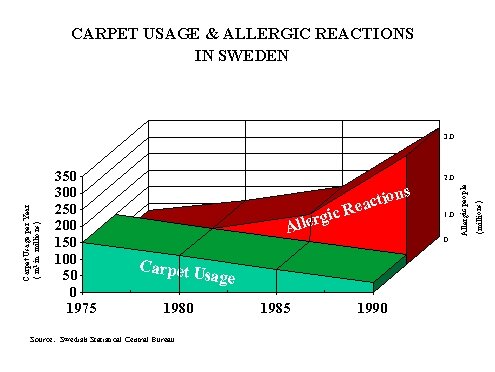
Carpets and Allergies in Sweden Claims in Sweden that textile floorcoverings cause allergic reactions in some people have not been adequately proved, according to two Swedish scientists. There were intensive discussions and reports in Sweden in the seventies claiming that carpet was the source of harmful contaminants resulting in allergic reactions. As a result, Swedish consumers and public building officials severely reduced their use of carpet. Professors Roshan L. Shishoo and Alf Börjesson, of the Swedish Institute for Fibre Polymer Research, have pointed out in several publications that the occurrence of allergic reactions and other environmental sensitivity in the general population has increased. They report that carpets constitute only a small proportion of the total floorcovering market in Sweden, having fallen from a market share of 40 percent in the mid-seventies to only 2 percent in 1992. Professors Shishoo and Börjesson argue that the removal and decline of carpet usage did not mean improved conditions for allergic patients. On the contrary, they missed the advantages of carpet such as comfort, insulation, and noise reduction.
THE PROTECTIVE INFLUENCE OF CARPET Carpet the bedroom and don’t miss school!
The Study In the region of Passaic, New Jersey, the Passaic Asthma Reduction Effort (PARE) was a 4-year screening program developed by Passaic Beth Israel Hospital in co-ordination with public, private, and parochial schools. The area is predominantly Hispanic and asthma prevalence is significantly higher in African- and Hispanic-American communities than in other populations. Asthma has been getting steadily worse amongst the population, including an increase in mortality rates. In addition, asthma is also the major cause of school absenteeism in the US. The survey was designed to help physicians identify environmental triggers for children to enable them to design individualized asthma treatment plans. Three Hispanic groups predominate in this community: Dominicans, Mexicans and Puerto Ricans. Most of the analyses were conducted on these three groups only. Of the potential 6,480 elementary children to be screened, parental questionnaires were returned for 4,634 children. The overall questionnaire responses identified 75% of children as Hispanic, with 10.5% and 5% as black and Asian children, respectively. The Questionnaire The two points of interest in the study are asthma diagnosis and school absenteeism. Each child was asked five questions about whether anyone smoked at home and, if so, who; whether they had pets and, if so, what they were; and whether they had a rug or carpet in their bedroom. Parents were also requested to complete a questionnaire about their child’s respiratory health, family history of asthma, school absenteeism, potential environmental exposures in the home, insurance status and race/ethnicity. Environmental factors in the questionnaire included exposure to tobacco smoke; mildew/mold in various areas of the home; carpeting in the child’s bedroom; the presence of furry pets; pet access to the child’s bedroom; use of feather pillows; presence of roaches; and the use of pesticides in the home. The Results Among children diagnosed with asthma, medication use was low. It was found that across all 4 years, the two major factors associated with asthma diagnosis were exposure to tobacco smoke in the home and dampness/mold in the bathroom. The study showed that feather pillows and carpeting in the child’s room had no statistical association with asthma diagnosis for the children in this study. The study also showed that where there was carpeting in the child’s bedroom, there were corresponding lower rates of asthma medication use and lower school absenteeism. For preschool children, damp bathrooms and mold were the only household factors associated with asthma diagnosis in the children studied. This latest study further endorses a previous study conducted by the European Respiratory Health Service, where more than 19,000 people were studied in 18 countries. That study also showed that when carpet or rugs were being used, especially in the bedroom, there was a lower incidence of asthma. CARPETS AND AIRBORNE PARTICULATES The Canadian carpet industry has been saying it all along: carpet fibres trap dust, pollen and other particulates until the carpet is cleaned properly with a performance vacuum. A high percentage of the particles held by a carpet's fibres never reaches the breathing zone (which, by the way, is closer to the floor in schools), as evidenced by these two graphs. The first compares the amount of particles in the air after walking on a carpet and on a 'hard' surface; the second after vacuuming those same dusty surfaces. These tests were supervised by the Professional Testing Laboratory in Dalton, USA. The conclusion, as they say, is clear! 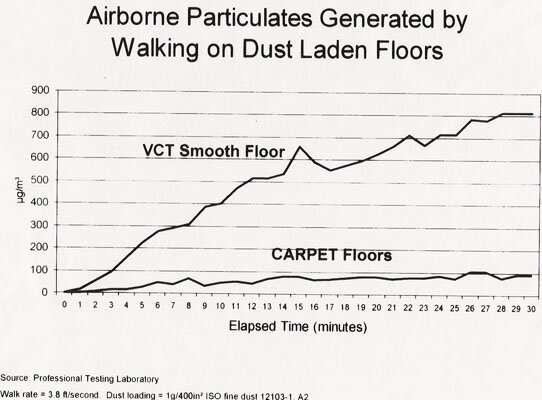 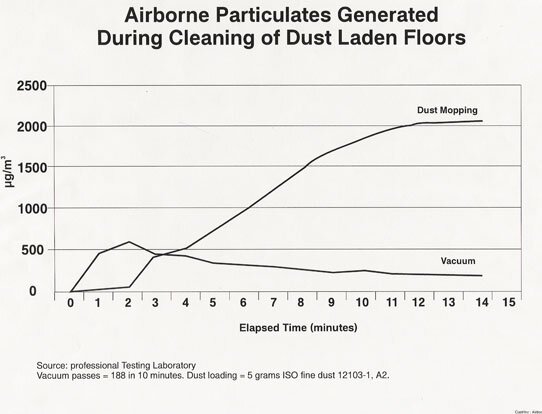 CARPET VALUE BOTH INTANGIBLE AND UNBEATABLE For Winnipeg-based architect and interior designer Ed Calnitsky, carpeting is one of those intangibles in life. “How do you put a price on comfort and warmth?” he asks. On the other hand, he points out that carpeting provides good value for your floor covering dollar, in a number of other ways as well, including noise absorption. He adds that there are a lot of intangibles that go into the value of carpet - it's not just price. However, when it comes to price, Alexandre Lacroix of manufacturer St-Georges Carpet Group / Venture Carpets in Québec will tell you exactly how good a value carpeting is compared to other floor covering surfaces. The average price of a carpet per square foot is 98 cents, compared to $2.74 for hardwood, $1.72 for laminate and $1.16 for ceramic tile. In addition, today‘s carpet is exceptionally durable. As Jean Claude Carisse, Executive Director of the Canadian Carpet Institute observes, “Carpets are made to last. Buying a carpet for your flooring needs is money well spent. Given the high quality of carpets today, you are getting excellent value for your floor covering dollar." Margaret Savard, Marketing Director for Crossley Carpets, cautions that you have to combine the kind of carpeting suitable for your application with the appropriate price point for you. If your need is residential, you can't put the same kind of carpet in the bedroom as you do in the family room, she notes. In business, the carpeting in the foyer will be different from that in the president's office. "It's a question of esthetics and durability," she says. "You have to make sure the application is right.” Linda Borman, a Toronto residential interior designer, says that synthetic carpets have come a long way. "Synthetics that were once here, like the polys, were awful, the surface looked terrible after a while. Now, they are much better. Nylons have become much less expensive and are very strong." Winnipeger Craig Best installed carpeting in his Victoria beach cottage bedrooms last spring (Victoria Beach is located on the southeast shore of Lake Winnipeg). "Durability and easy maintenance were concerns," Best says. "At the beach, you want a floor covering that can withstand some punishment. You don't want to have to worry about all the sand that is tracked in." Another value of carpeting these days is indoor air quality. It was thought at one time that hard surfaces were better for indoor air quality. However, scientific studies have shown that particles that land on hard surfaces get continually stirred up by people and animals walking on the floor, as well as forced air and radiant heating systems that keep particles moving around. "Scientists have concluded that carpet is beneficial to indoor air quality because it traps and immobilizes potential allergy causing particles, preventing them from re-entering the indoor air system. Now the trick is, of course, that the carpet has to be regularly cleaned and properly maintained." says Leslie Beaumont of carpet manufacturer Beaulieu Canada. Adding all the intangibles up, comfort, warmth, sound absorption, durability, indoor air quality and, of course, price - the value of carpet is unbeatable! INDOOR AIR QUALITY "GREEN LABEL" CARPET TESTING PROGRAM The Quality of Indoor Air - Looking at the Big Picture Today, indoor air quality (IAQ) is an important environmental consideration for many Canadians. It is important to know how to identify low-emitting products to preserve the environment. We spend up to 90% of out time indoors, at home and at work, often in energy-efficient buildings that lack sufficient fresh air ventilation. The quality of the outside air, activities in the building and the presence of people impact on these self-contained environments. Many new construction products, surface finishes, interior furnishings, floor coverings and renovating/cleaning agents play roles in the quality of indoor air. Even though scientists have told us that new carpet is one of the lowest emitters, responsible carpet manufacturers have been proactive in their efforts to scrutinize their products and develop ways to further reduce product emissions.In the public interest, the Canadian Carpet Institute has adopted the (US) Carpet & Rug Institute’s Indoor Air Quality (IAQ) Testing Program for Carpets that minimizes the potential of emissions from new carpet installations. The GoalThe goal of the Program is to help consumers with their buying decisions by identifying products that have been tested and meet stringent IAQ requirements.How the Program WorksIn the testing program for carpets, samples are collected from the manufacturer’s production process. Each sample is tested individually for chemical emissions by an independent laboratory, using highly sophisticated dynamic environmental chamber technology.The test procedure follows an approved methodology recognized by the US Environmental Protection Agency (EPA) and the American Society for Testing and Materials (ASTM D-5116). The volatile organic compound (VOC) emissions are identified and quantified as though the carpet was in a “real building” situation. Carpets are re-tested on an ongoing basis to ensure that the required emission levels are not exceeded. Carpets are tested for
The CriteriaProducts that meet the emission criteria are allowed to display the “Green Label” (it is usually found on the back of carpet samples). This authorized label displayed on the product contains an identification number assigned specifically to the individual manufacturer for each carpet that meets the criteria.If the products exceed the emission criteria, the manufacturer is so advised and is requested to make process or formulation changes in order to reduce the emissions. After the appropriate product modification, the manufacturer may resubmit the product for additional testing. Products that do not meet the test criteria will not thereafter be allowed to affix the “Green Label” until they meet the test program criteria. Please contact the Institute for the names of its manufacturer-members who offer carpets that are “Green Label” approved. 
R-2000The Canadian Federal government’s R-2000 Home Program authorizes the installation of “Green Label” approved carpet, in unlimited quantities, in these super-tight houses. AvailabilityPlease contact the Institute to obtain the names of our manufacturer members who offer “Green Label” approved carpeting. ReminderIt is also important to know that with new carpet, adequate ventilation during and after installation can lower concentrations and minimize the impact on IAQ. Of course, regular and effective cleaning also adds to good air quality.
CARPET MYTHS DISPELLED Often-Held Myths Surrounding Carpet are Dispelled Myth #1: “There are health risks associated with carpet.” Truth: An extensive toxicological assessment of components of carpet concluded that the chemicals in carpet pose no health risks of public concern. Reference: In 1994, Environ Corporation of Arlington, Virginia, prepared a study, Safety Assessment of Components of and Emissions from Carpets. The conclusion was: “For the chemicals identified as being present in, but not emitted from carpet, there is no reason to believe that they present any health risk of public concern. For chemicals identified as being from carpet, no cancer risk of public health concern is predicted for any chemical individually, or when the predicted upper limit on risk is added for all potential carcinogens. Similarly, no non-carcinogenic effects of public health concern would be anticipated.” Myth #2: “Mold and mildew can grow in carpet.” Truth: Mold and mildew exist ONLY where there is excess moisture and dirt coupled with poor cleaning and maintenance habits. Mold growth can occur on any surface - from windowpanes to carpet - that is not properly maintained and when moisture is extreme. Eliminating sources of excessive moisture, such as water leaks, and controlling humidity greatly offset the potential for mold to grow. Reference: In a study conducted by HOST/Racine Industries, six Florida schools were checked for indoor air problems triggered by high humidity and reduced ventilation. Dust-lined, moldy ducts and plumbing leaks onto ceiling tiles allowed mold to grow and released millions of spores into the air. The research supported that mold and mildew are not associated with a particular surface, such as carpet. Myth #3: “Carpet is a cause of the asthma and allergy increase.” Truth: Comparison data from Sweden supports that there is no link between carpet usage and the incidence of asthma or allergies. We are not aware of any published scientific research demonstrating a link between carpet and asthma or allergies. Reference: A study, based on historical figures for ten years, was reported by scientists at the Swedish Institute of Fibre and Polymer Research. They found that while the use of carpet in Sweden had steadily decreased since 1975, the occurrences of allergic reactions in the general population had increased. (Please refer to the graph accompanying the article on “Carpets and Allergies in Sweden”)
Truth: This is true as stated. The critical point, however, is often missed. Carpet holds allergen-causing substances tightly and, as a result, keeps allergens from becoming airborne, minimizing the level of allergens in the breathing zone. This translates to lower exposure potential. The allergens held by carpet’s filter-like effect may be removed by vacuuming, refreshing the filter-like properties of the carpet to allow more material to be removed from the air. Vacuuming mattresses, carpet, and upholstery once or twice a week removed allergens, including dust mite feces - a known source of allergen. It is important to use the proper type of vacuum to minimize re-suspending allergens. Reference: In Carpet and Airborne Allergens, A Literature Review, Dr. Alan Luedtke refers to the results of a study aimed at determining the effect of routine vacuuming cleaning that indicate frequent vacuum cleaning over a short time significantly reduces house dust and mite allergen levels in carpets. Environmental Protection Agency (EPA) studies indicate the effectiveness of carpet in reducing airborne particles. This data indicates that soil in carpet is significantly reduced following cleaning.
Myth #5: “Carpet is a source of indoor quality (IAQ) problems.” Truth: As noted previously, an extensive toxicological assessment of components of, and emissions from, carpet concluded that the chemicals in carpet “present no health risks of public health concern.” Further, allergens in carpet may be removed by vacuuming. Reference: EPA/RTI Total Building Cleaning Effectiveness Study states, “Organized cleaning contributes to reduction of particle VOCs and biological pollutants 50%+.” Also referenced is the previously mentioned 1994 report from the Environ Corporation, Safety Assessment of Components of and Emissions from Carpets. Myth #6: “Carpet is harder to maintain than hard-floor surfaces, and this maintenance is more expensive.” Truth: Properly maintained carpet only needs vacuuming once or twice weekly and periodic extraction cleaning. The sweeping, mopping, stripping, waxing, and buffing that hard surface floors demand are more laborious and costly. Reference: A Building Office Managers Association (BOMA) study found hard-surface floors require two-and-a-half times more annual cleaning than carpet. Myth #7: “Carpet is environmentally non-sustainable.” Truth: CCI member companies, representing over 90 percent of the industry’s manufacturers, have an excellent track record over the last dozen years of decreasing wastes produced and energy consumed, improving the industry’s sustainability. Myth #8: “Carpet is a major emitter of volatile organic compounds (VOC).” Truth: Most new interior furnishings and building materials emit VOCs for a period of time. Emissions from new carpet are among the lowest of any household’s indoor furnishings, and most VOCs dissipate within 24 hours - even faster with good ventilation. Reference: To further minimize other IAQ concerns, specify low-emitting products, including CCI Green Label carpet, when selecting household products and furnishings. Myth #9: “Formaldehyde is used in the production of new carpet.” Truth: Formaldehyde is not used in the carpet manufacturing process. It is not emitted from new carpet. Reference: An article published in 1989 in the American Textile Chemist and Colorists Journal stated that research conducted by the School of Textile Engineering, Georgia Institute of Technology, under Dr. Wayne Tincher and other researchers dispelled this widely-held myth. Myth #10: “Latex in carpet produces allergic reactions.” Truth: The latex that holds the fibers and backing together in broadloom carpet is synthetic. Synthetic latex is not associated with the allergic reactions of natural latex, which are caused by the proteins found in natural latex. Reference: Carpet is made primarily of the same innocuous materials found in clothing and other everyday fabrics, including polypropylene and nylon. March 2001 LINKS Manufacturer Members: BEAULIEU CANADA CROSSLEY CARPET MILLS LTD. KRAUS CARPET MILLS LTD. VENTURE CARPETS INC. Supplier Members: Dow Chemical Canada Inc. Invista Canada Nylene Canada Inc. Propex Inc. White Lamb Finlay Other Links: Institute of Canadian Undercushion Manufacturers Institute of Inspection, Cleaning & Restoration Certification Home Builder Magazine (of the Canadian Home Builders' Association) National Floor Covering Association |
||||||||
| | Home | The CCI | Members | Information | Consumer's Guide | Contact CCI | | |||||||||
| 1064 Cadboro, Ottawa, Ontario K1J 8E1 (819) 684-8444 * Fax/Télécopieur (819) 684-5444 * |
|||||||||